
Three Keys for High-Myopia Lens Selection
The impact of these factors on lens thickness, in descending order of influence is: Lens Refractive Index &lgt; Pupillary Distance (PD) &lgt; Frame Size
Among them, frame size has the most significant impact. If you choose a frame that doesn’t match your pupillary distance, even the best lens material won’t help.
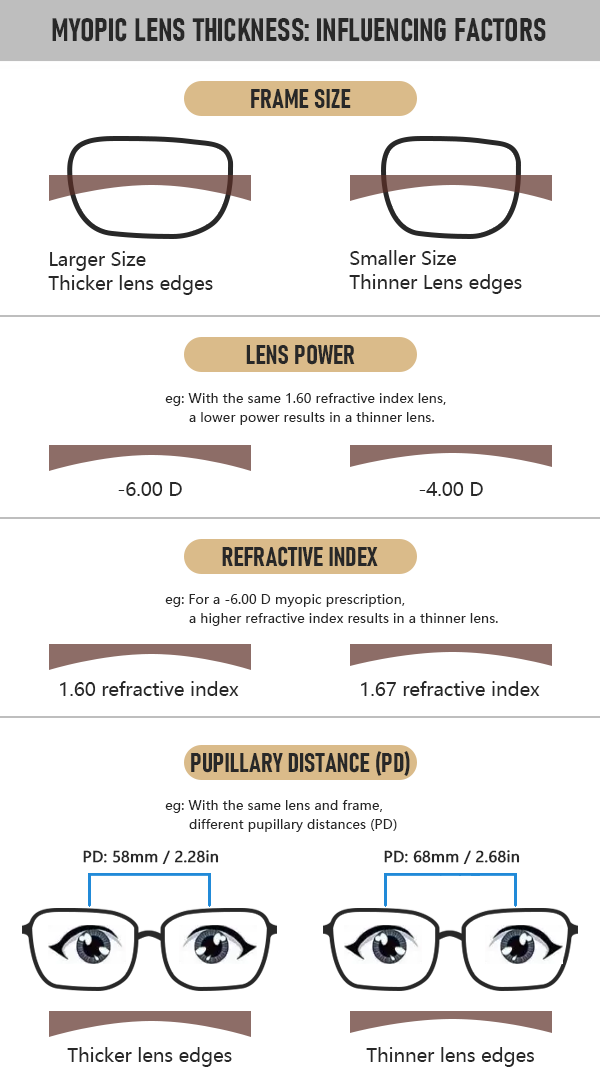 >
>
Practical Guidelines Based on PD and Frame Type
1.For those with a large PD (66–70 mm or above):
Opting for a small-sized frame with wide rims means a 1.60 refractive index will be more than sufficient for a thin lens effect.
2.For those with a small PD (62–64 mm or below):
Choosing a large frame with thin rims may require lenses with a 1.67 or 1.71 refractive index to keep the lens thin.
Core Conclusion
The top priority is to select a small-to-medium-sized frame that matches your PD, followed by choosing the appropriate refractive index.
A Practical Formula for Frame Selection (Critical for High Myopia)
Decentration = (Lens Width + Frame Bridge Width - Pupillary Distance) / 2
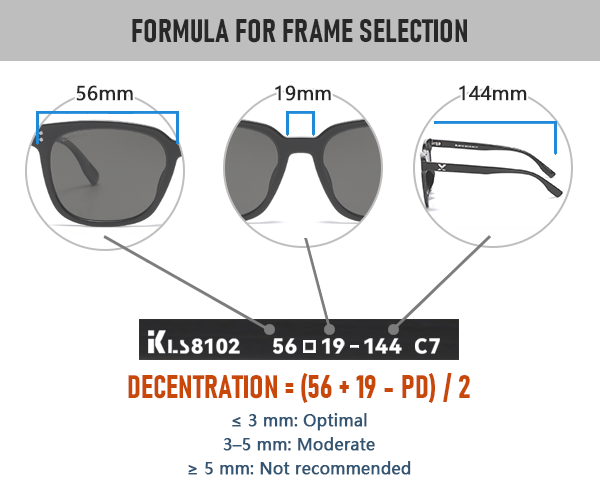
Using this formula ensures your lenses are thin, lightweight, and comfortable to wear.
For high myopia: The ideal calculated decentration ranges from 1–3 mm.
For low myopia: A decentration within 5 mm is acceptable.